What? A post about how to cook steak? What does that have to do with becoming technonymous? Or parenting? Or intentional technology use? Or digital minimalism? Or this little corner of the internet I’m trying to carve out?
Fair question. Let me explain.
One of the most overlooked parts of intentional living is learning to do things well with your own two hands. It’s not just about screens, notifications, or attention—it’s about confidence, self-reliance, and carving out your space in the world.
Change a tire. Patch drywall. Go camping. Cook a steak.
When you can do these things, you stop outsourcing your life to other people, other services, and other algorithms. You start building trust in yourself. And trust me—once you nail this, you’ll never look at a steakhouse the same way again.
The Steak
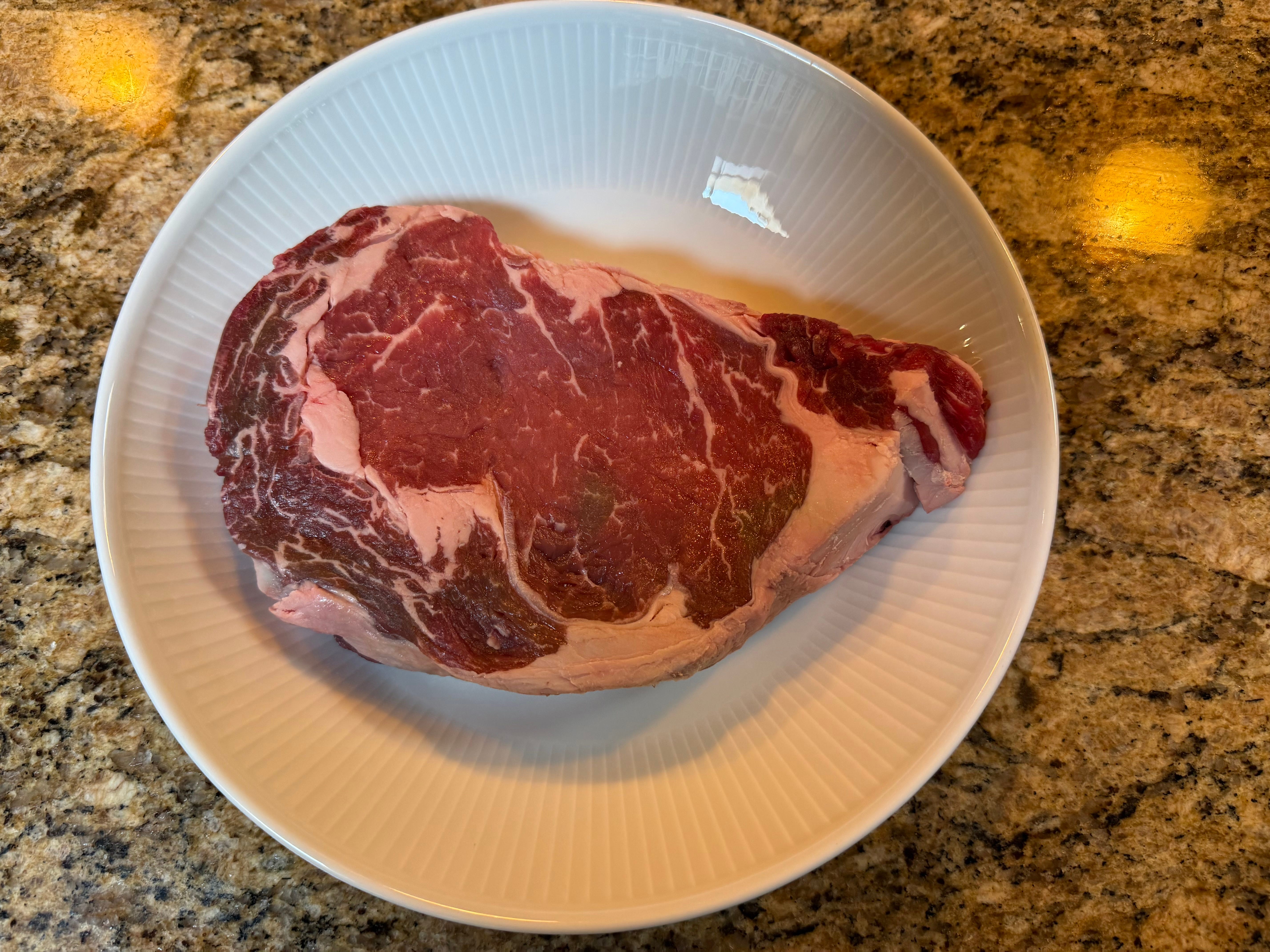
Forget filet mignon. It looks fancy on menus but it’s too lean and often disappoints. You want a ribeye or a New York Strip with visible marbling. Fat equals flavor. If you don’t have a trusted butcher, walk into Whole Foods and grab a dry-aged ribeye that looks like this:
The Ingredients
Just four, plus the steak:
- Salt
- Fresh cracked pepper
- A stick of Kerrygold herb butter
-
A splash of avocado oil
That’s it. No marinades, no gimmicks.
The Tool
No grill, no sous vide machine. Cast iron is king. A Lodge pan works great. If you already own something fancier like a Smithey or Field, sure, break it out. But don’t let gear get in the way here—any solid cast iron skillet will do.
Supporting cast: tongs and an instant-read thermometer.
The Process
Step 1: Season Early
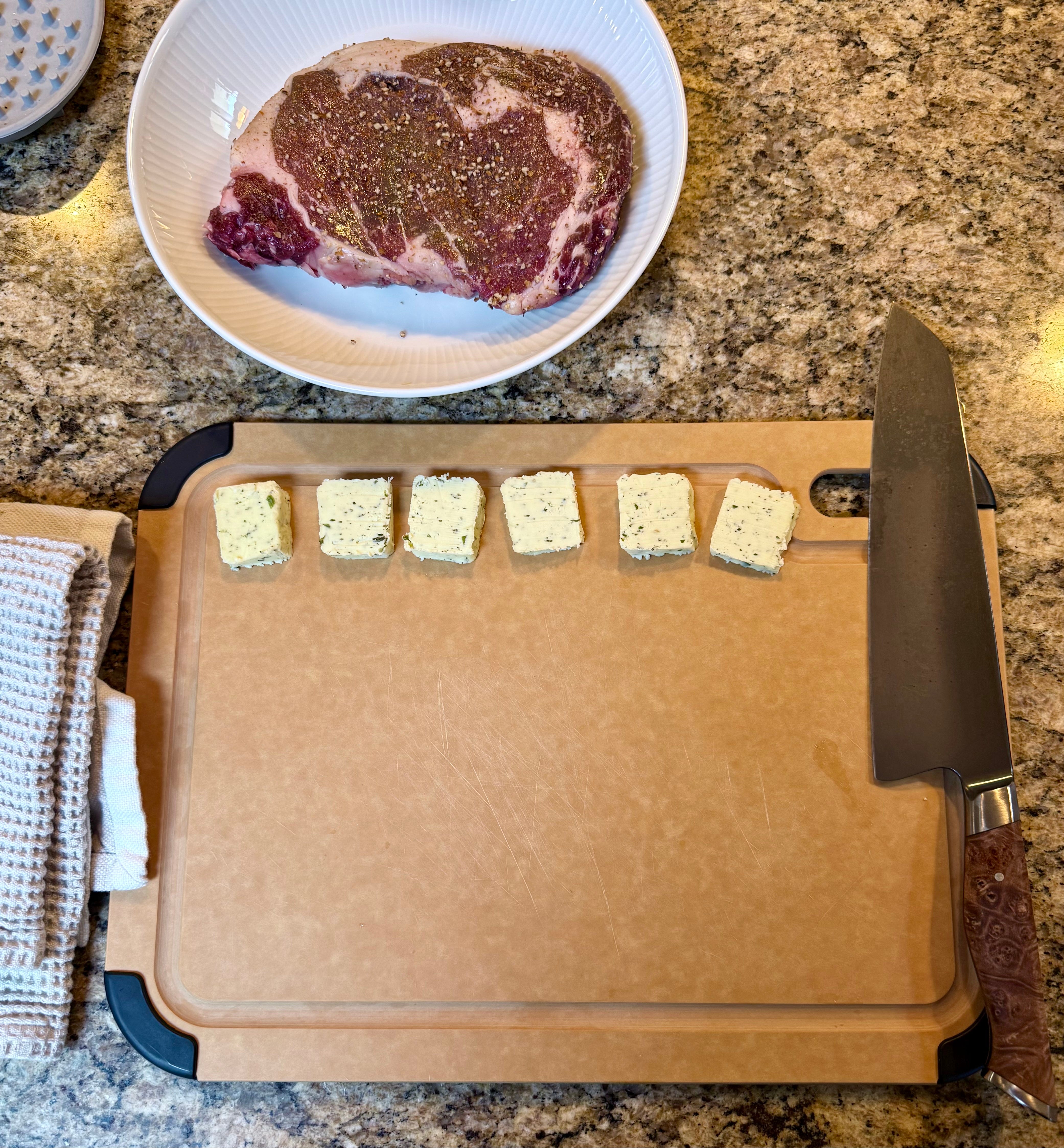
Pat the steak dry, salt and pepper generously, and ideally leave it overnight in the fridge. At minimum, give it an hour.
Step 2: Temper
Take it out 90 minutes before dinner. Cold steak in a hot pan = uneven cook.
Step 3: Heat the Pan
Thirty minutes before dinner, put your cast iron on the burner and turn it all the way up. Leave it for 10 minutes. You want nuclear-hot steel.
Step 4: Showtime
At T-minus 20 minutes, add a thin film of avocado oil—it’ll smoke, that’s good—and drop in the steak. Hear the sizzle? That’s flavor being locked in.
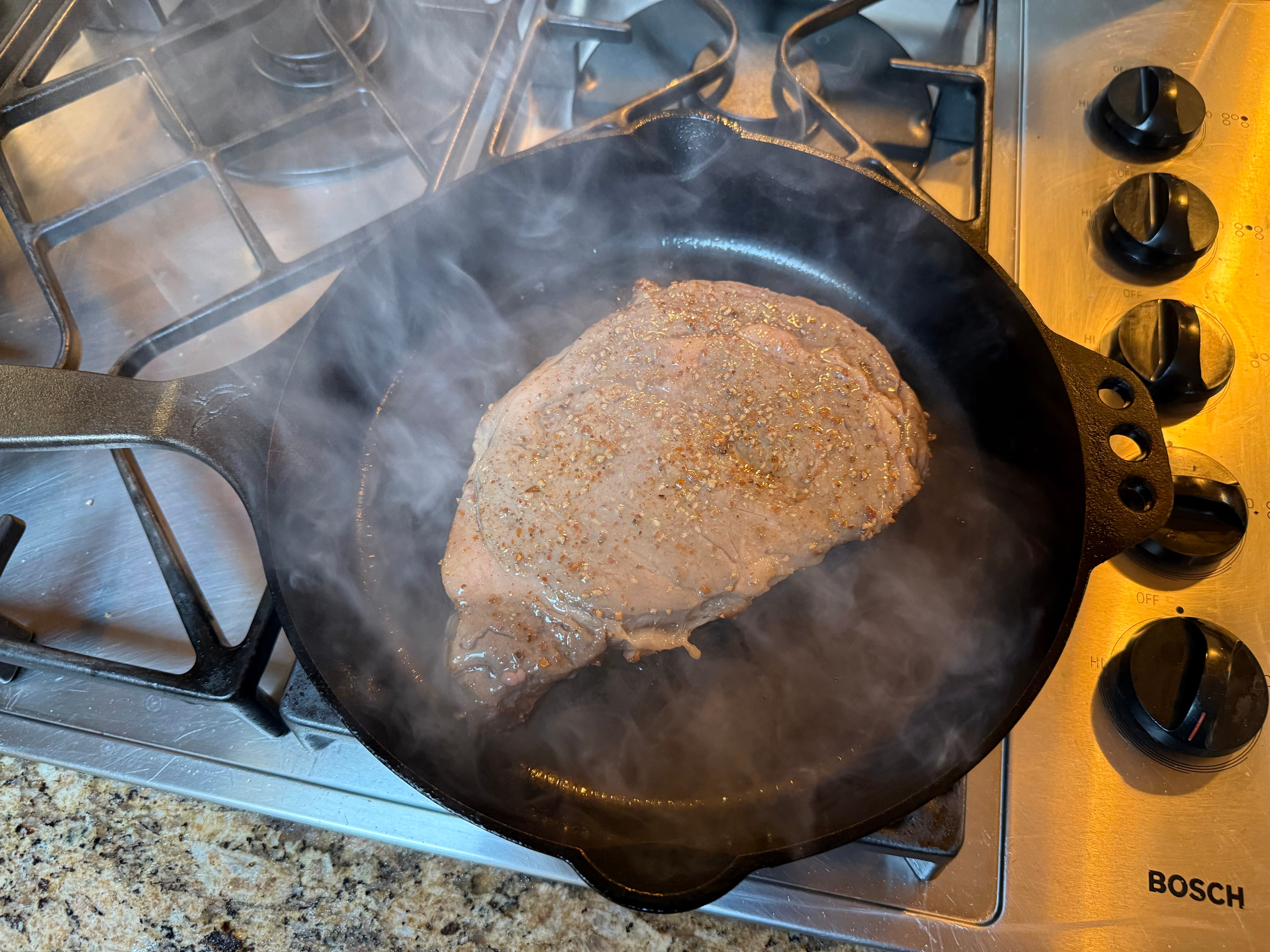
- 3 minutes, flip. (At first flip, the steak measured 68ºF)
-
3 minutes, flip back. (On second flip, we were up to 90ºF — at this point, the temp is coming up fast, it took less than a minute to get up to 100ºF)
-
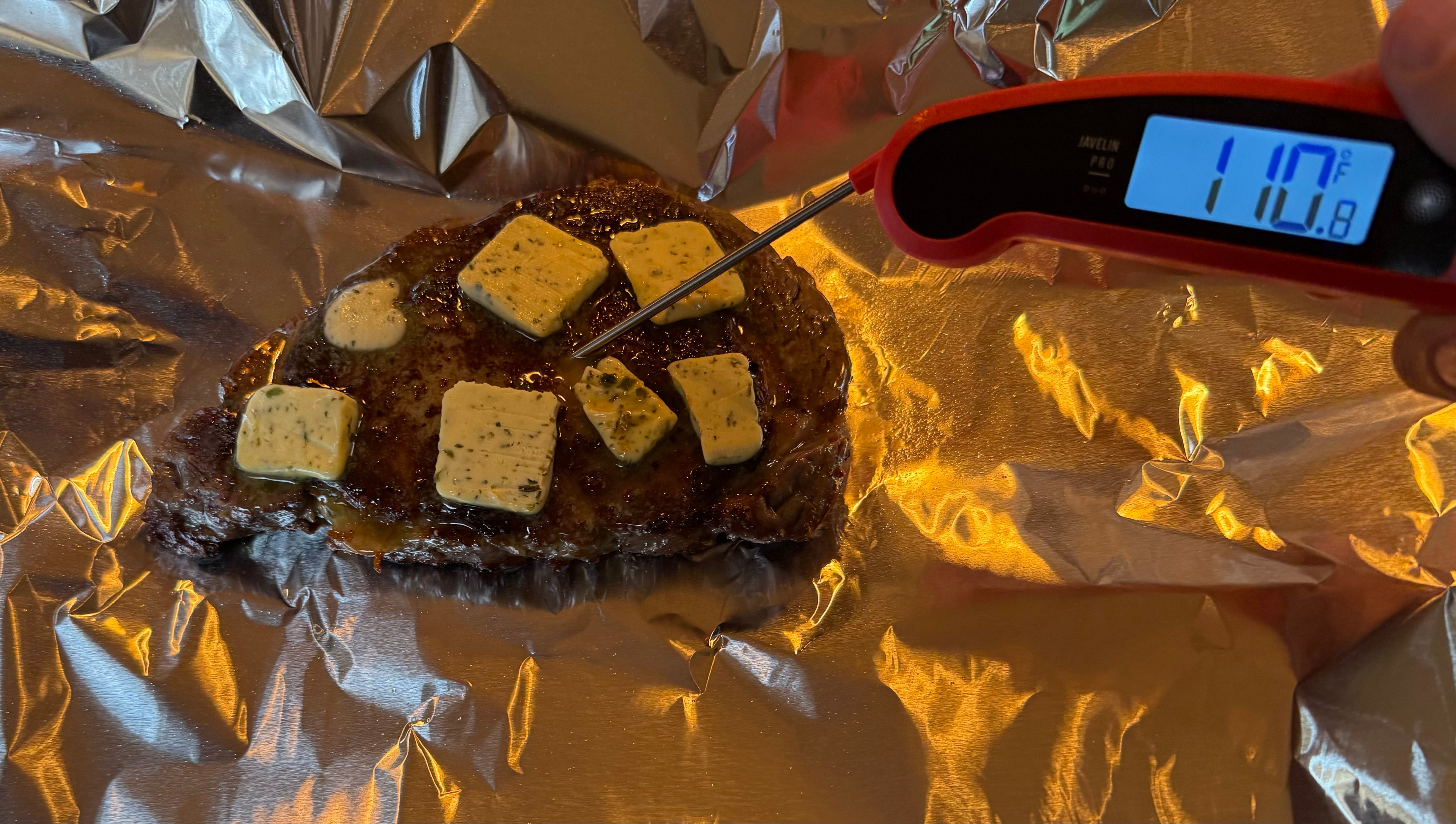
Check temperature: at 100°F, add butter on top.
-
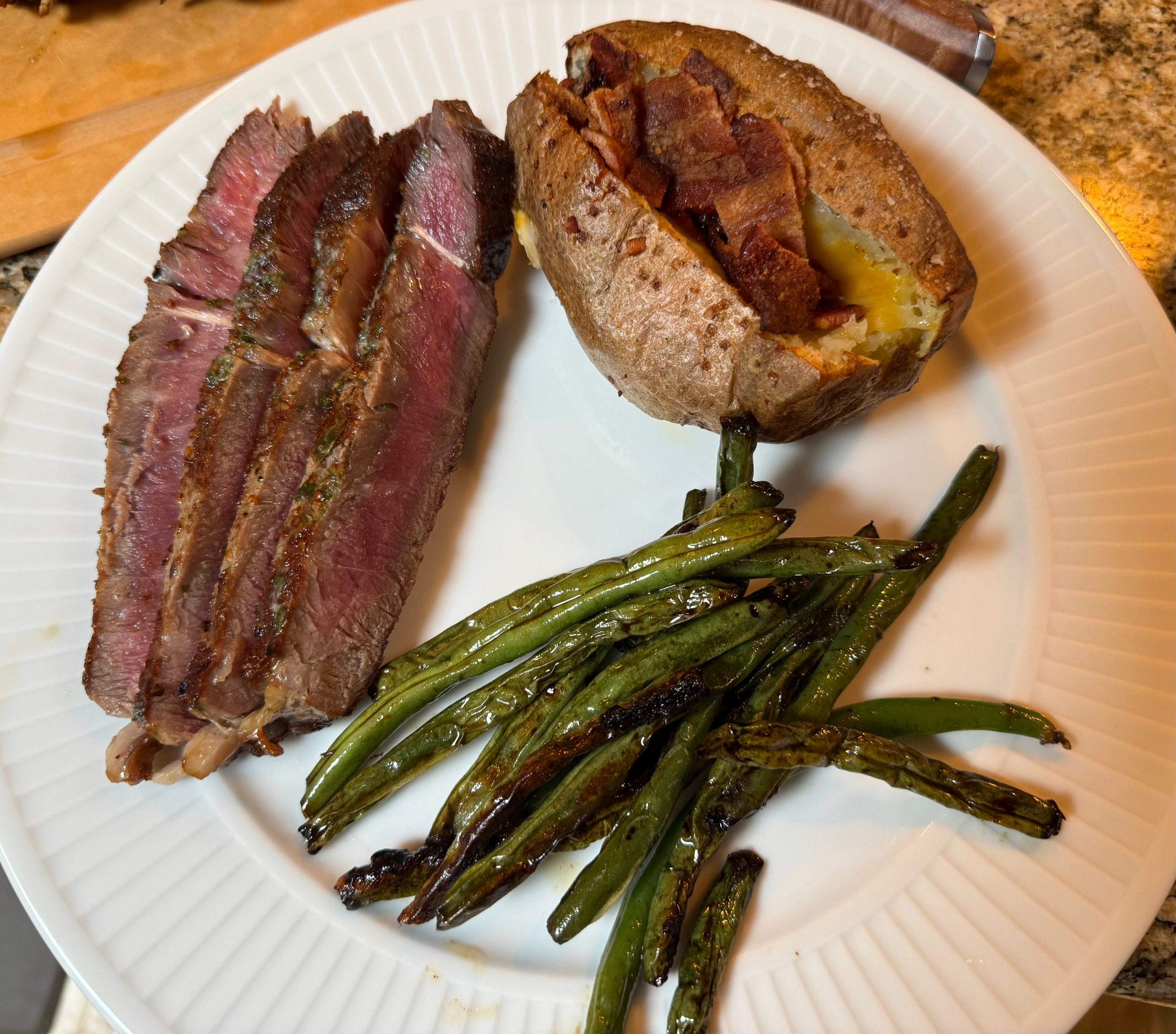
Cook to 110°F internal, then pull it. (It will keep rising as it rests.)
Step 5: Rest
Wrap the steak in foil, cover with a towel, and let it rest for 10 minutes. This is the toddler analogy moment: skip the rest, and you’ve got a cranky meltdown on your plate. Give it time, and you’ll get magic.
Step 6: Slice
Unwrap like it’s Christmas morning. Always try to slice perpendicular to the grain for tender bites. Sometimes with ribeyes I end up needing to slice at 45º angle to the grain, and this also works well. I plate sliced steak in the kitchen so everyone gets their share without a knife fight at the table. Also, one ribeye is plenty for 2-3 people.
Why This Matters
Cooking a steak isn’t just about dinner. It’s about choosing to build skill instead of scrolling. It’s about proving to yourself—and showing your kids—that competence is confidence. It’s choosing an incredible piece of meat over soggy, luke-warm Doordash.
Every time you choose to learn something hands-on, you’re making a small rebellion against convenience culture. Against outsourcing. Against becoming just another passive consumer.
So cook a steak. Cook it better than any restaurant can. And remind yourself: you’re capable of more than you think.